Independent portfolio concept / Shopify demo build
Luméra Atelier.
A quieter kind of luxury.
A flagship skincare product, an editorial identity, and a shopping experience designed around a considered evening ritual.
Luméra is fictional. This case study documents the supplied v3 theme and its design intentions. No real client relationship, verified reviews, sales results, or product efficacy are claimed. Screens shown here are local theme renders, not captures of a live Shopify store.
01 / The idea
Give one product
room to be understood.
The intended shopper wants to understand the serum, imagine it in an evening routine, and make a confident choice without navigating a crowded catalog.
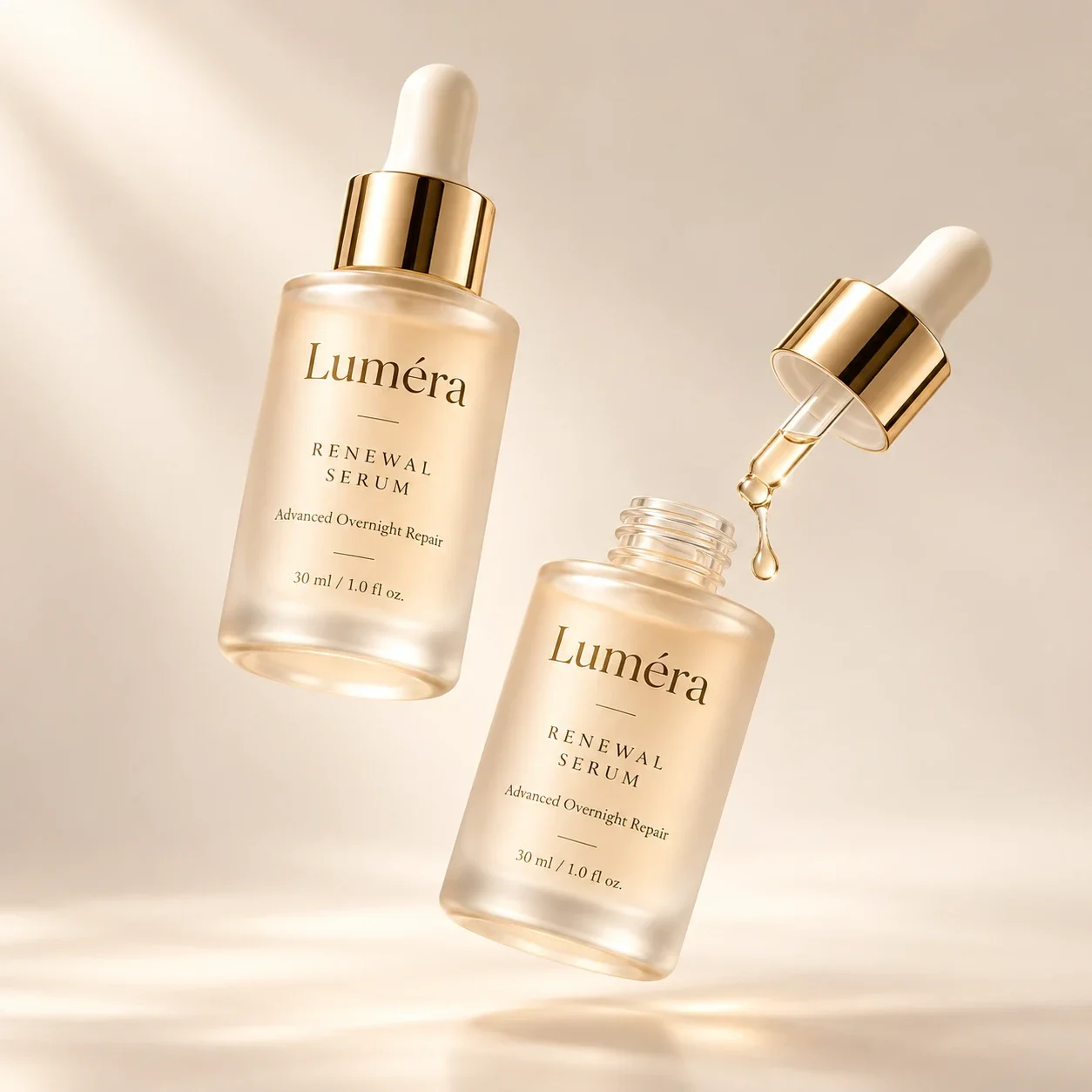
A warm neutral palette, generous space, serif headlines, and close product photography create a consistent visual identity. The product remains the focal point throughout the experience.
A deliberate page sequence
The supplied homepage moves from campaign introduction to the purchase section, benefits, ritual imagery, application guidance, comparison, visual stories, sample reviews, and FAQs. Each section answers a different question before the final call to action.
02 / Responsive presentation
One identity.
Across every screen.
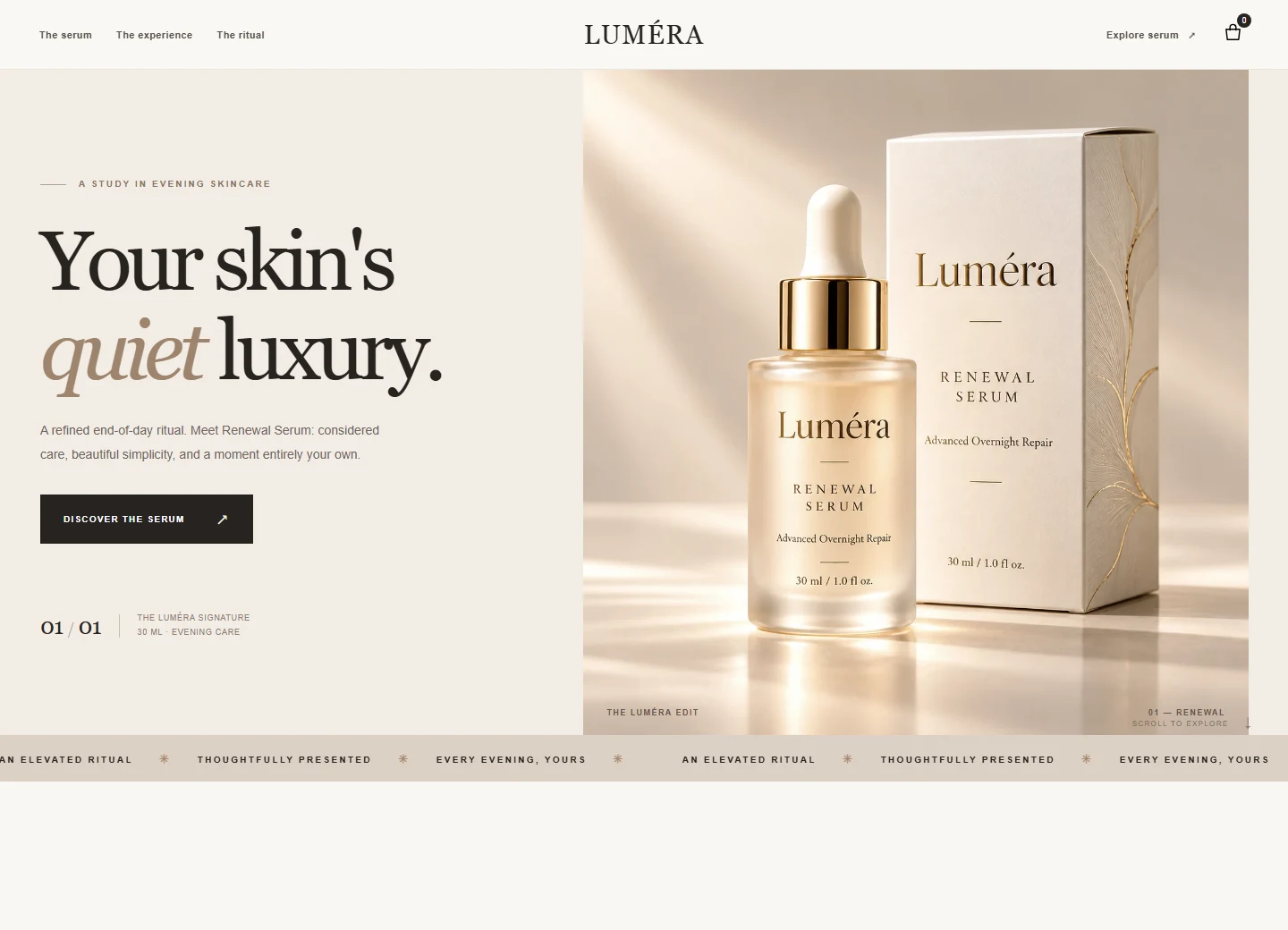
Actual v3 theme markup and CSS rendered locally with sample product data.
03 / Purchase experience
A clear path
from interest to choice.
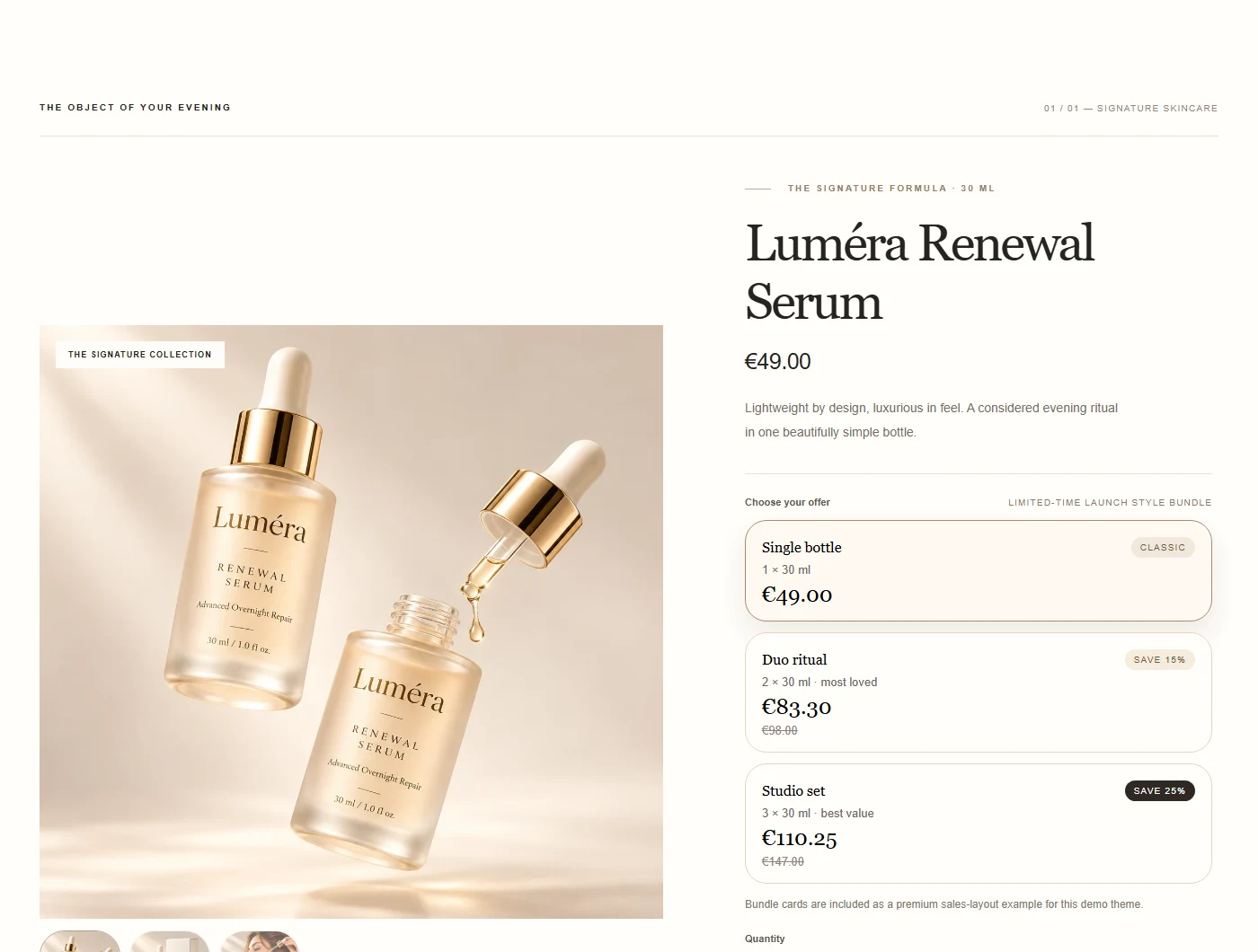
The product gallery supports alternate views. A nearby purchase card groups the product name, price, variant control, quantity, and purchase action. On smaller screens, the theme stacks this content into a single reading order.
Bundles, with clear boundaries
The supplied theme presents single, duo, and three-bottle choices. Selecting a card updates quantity. The displayed savings are a design demonstration: actual Shopify discounts must be configured and verified separately before any launch.
Selected: Single bottle. Interaction demonstration only; no product is added to a cart.
04 / Interaction with context
Show the interaction.
Keep the claims honest.
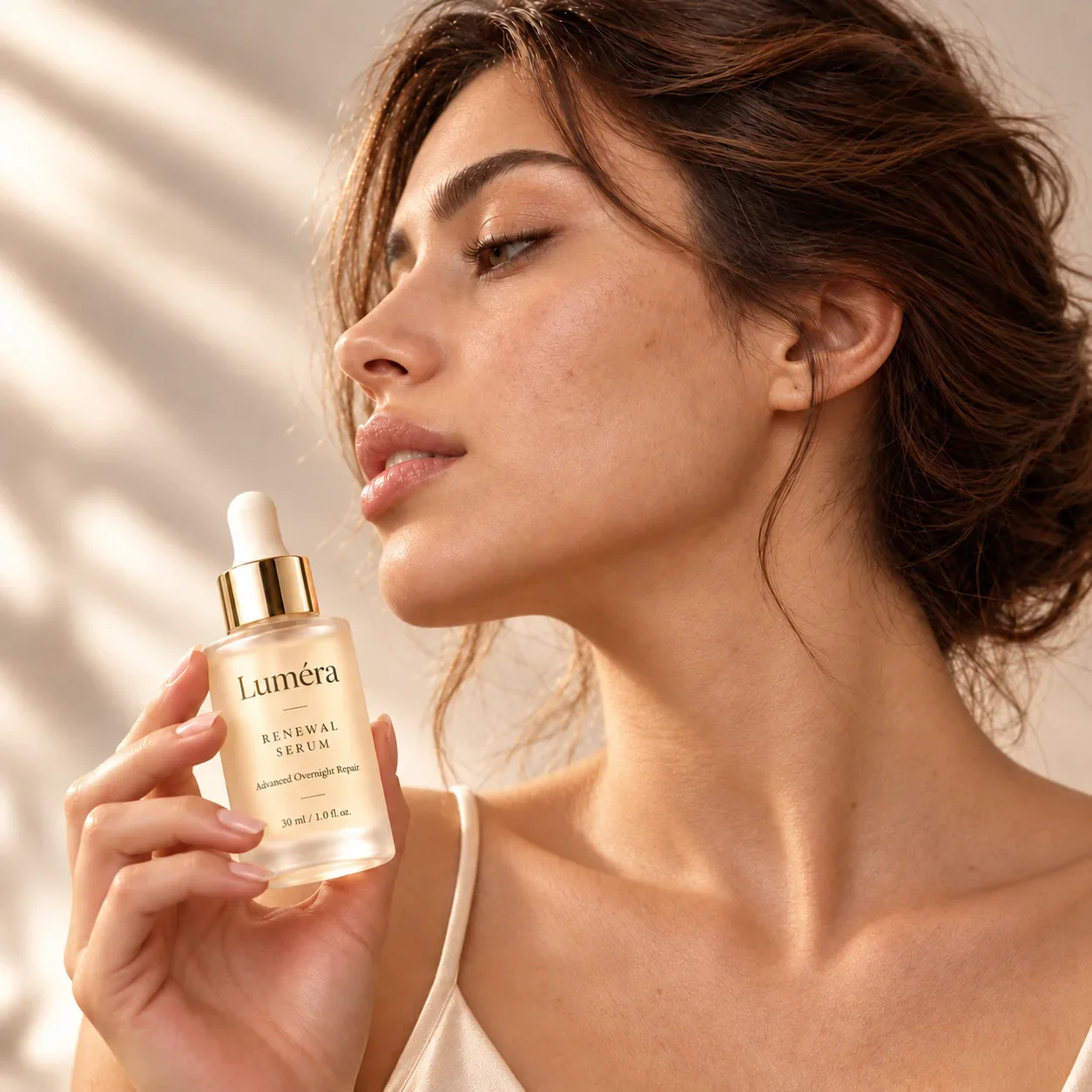
The original theme includes an interactive comparison controlled by a range slider. This reproduction uses the supplied sample images and supports keyboard, touch, and mouse input.
These images illustrate a UI pattern. They do not document real treatment results or establish the serum’s effectiveness.
Use the arrow keys while the slider is focused to adjust the reveal.
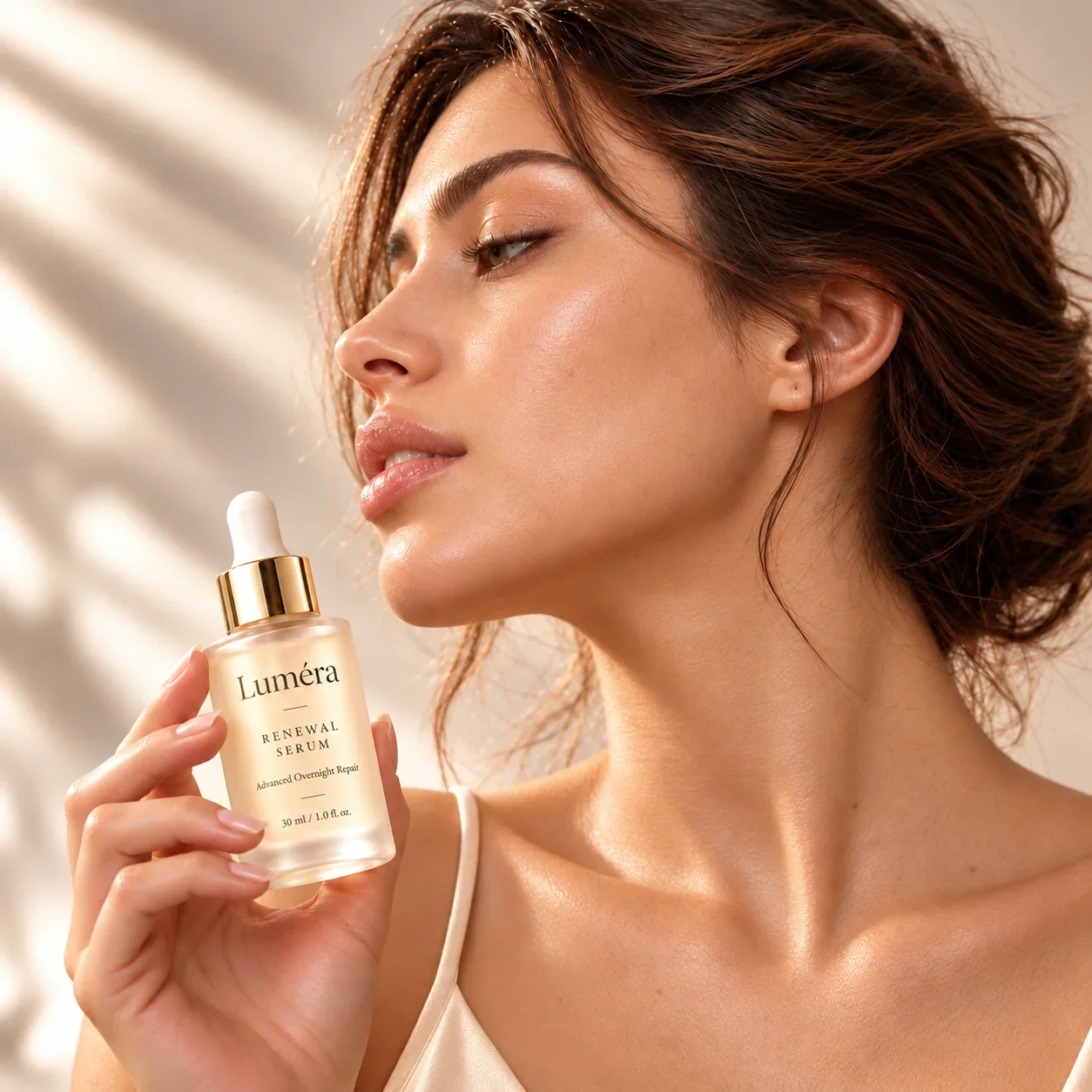 Sample BSample A
Original v3 concept assets. Illustrative imagery only.
05 / Content that explains
Build understanding
around the product.
Application and visual stories
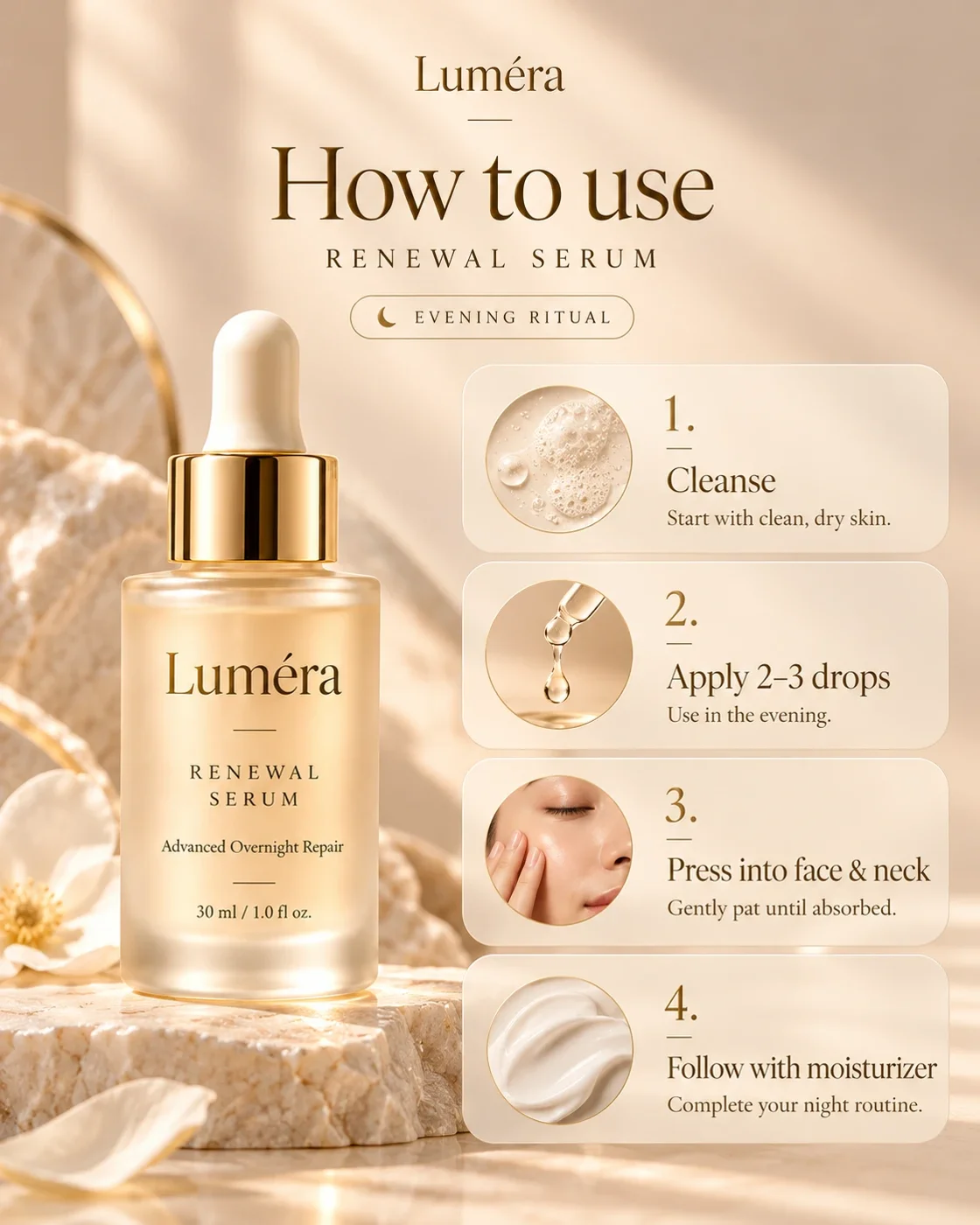
A dedicated instructional graphic gives the routine a visual sequence. Vertical story covers show how short-form video content could sit alongside product information. The supplied files are cover images, not playable videos.
Trust content, responsibly presented
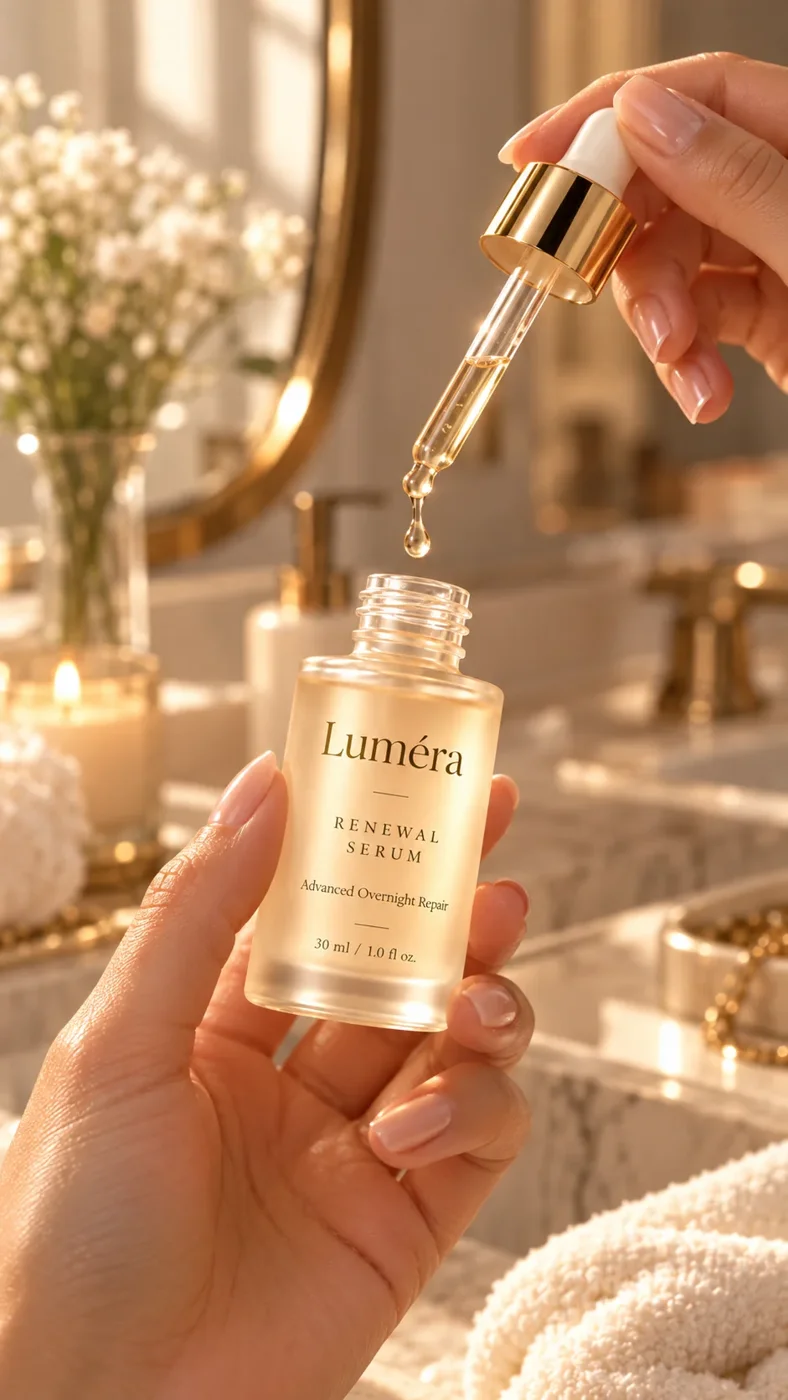
The theme contains customer-style photographs and review layouts labeled as samples. A real merchant would need permissioned customer content and verified review information before using these sections commercially.
FAQs and Shopify integration
Native details elements keep FAQs lightweight. The theme source includes Shopify product forms, cart requests, and an optional accelerated-checkout slot. A live integration needs a configured product, inventory, policies, and checkout testing in Shopify.
Source inspection confirms these components exist. This local portfolio build does not verify live payments, discount application, inventory, or checkout.
06 / What this demonstrates
Design intent.
Working interface patterns.
The project demonstrates a cohesive product identity, editable Shopify sections, gallery interactions, bundle selection, responsive layouts, and a considered path through product information.
It is a portfolio demonstration of design and implementation. There are no documented business outcomes to report.
Is Luméra a real client or active skincare brand?
No. Luméra is an independent fictional portfolio concept.
Are the screenshots from the actual theme?
Yes: the desktop, mobile, and purchase images were captured from a local rendering of the supplied v3 Liquid templates and CSS. Shopify data was simulated. They are not screenshots of a live Shopify storefront.
Can this approach adapt to another product?
The content structure and implementation patterns can be adapted after reviewing the product, brand assets, and project scope.